



 |
 |
 |
 |
 |

| Region | Burgundy |
| Appellation | Cote de Nuits |
| Category | Red Wine |
| Classification | Villages (Burgundy 1935) |
|
|

| Cat | Region | Year | Producer, Wine | Size | C(s) | Bt(s) | HKD/Cs | HKD/Bt | Score | Critic | |
 |
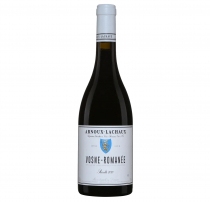
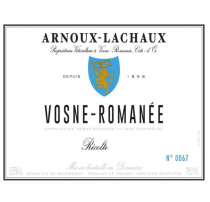
Burgundy | 2019 | Domaine Arnoux-Lachaux, Vosne-Romanee | BT | - | 2 | - | HK$5,000 | 92 | WK | |
| All wines are subject to remaining unsold. We offer free delivery for purchase exceeding a certain amount. Please check Delivery Rates for details. | |||||||||||
A wide range of spice elements include exotic tea, sandalwood, violet, lavender, plum and dark raspberry. The elegant and equally pure medium weight flavors possess a highly seductive texture thanks to the fine-grained tannins supporting the slightly firmer, dusty and mildly austere finale. This too is excellent and particularly for a villages level Vosne.
Score: 90-92 Allen Meadow (AM), Bourghound (BH), January 2021
The 2019 Vosne-Romanée Village has the most fruit on the nose compared to the Village Crus from Nuits Saint-Georges and Chambolle- Musigny, pure dark cherries, raspberry and crushed stone scents, just a touch of wild mint emerging with time. The palate is medium-bodied with pliant tannins, a fine bead of acidity, quite sweet with crunchy red fruit towards the finish. Palpable energy here, this is well worth seeking out.
Charles Lachaux informed me well in advance about a change in policy with regard to tastings. Henceforth, he will be showing the bottled vintage rather than the most recent one in barrel. It’s a move that I support because he is syncing it with a later release of his wines, so my notes are still timely, though this decision did raise the eyebrows of some of his neighbors in Vosne – not that he cares one jot. “All the 2019s were bottled in early May,” he explained to the gathering of six invitees. “The crop is small, though not as small as 2020, due to a heat wave that also concentrated acidity. The goblet pruning allows us to achieve phenolic ripeness faster than regular pruning. We prune six to eight buds per vine, which produces twice as much foliage. [Lachaux could not explain why the increased leaf cover does not exaggerate the sugar level.] In 2019, there was no tilling of the soil. Instead, we let the grass grow, and at one point it got so tall you could hardly see the vines. Then instead of mowing it, we roll the grass so that it lies flat on the ground. We found that this helps defend the vines against frost, raising the frosting zone, which was especially useful in 2021. Then, after the grass is rolled, we allow it to decompose so that it increases the carbon in the soil. We started picking on September 12, not necessarily only in the mornings [Lachaux aims to pick at the precise optimal moment]. The average crop is 19hl/ha with the lowest at 13hl/ha. This was the first vintage where we did not do trimming on all the vineyards, which was a big move. We just do a few punch-downs and that is enough to finish up all the sugar, using a vertical press that was introduced in 2011. Everything is 100% whole cluster and vinified with no sulfur, with free sulfur ranging from 9mg/L up to 20mg/L. We are also using less new oak, and from 2020 we have introduced ceramic tanks that are easy to clean – you just need to hose them out. We are now doing less in the winemaking process. The longest time in tank is nine days for two cuvées for the Clos de Vougeot and Latricières-Chambertin. The highest alcohol level is 13.3° in the Nuits Saint-Georges Les Proces, but most are below 13°. We use natural corks, 54mm long, that cost just under two euros per bottle. We used less than 10% new oak for the Village Crus and up to 35% for the Grand Crus.” Arnoux has radically altered the wines at this domaine for the better. He’s a bit of a disrupter to way things are done in this part of the world, and he emphasized that while he is seen as a protégé of Lalou Bize-Leroy, in fact only two or three of their practices overlap. I guess you could say it is more of an ideological meeting of minds. I admired these wines a lot. They are very à la mode with the use of whole bunch and non-interventional winemaking, inter alia, but they deliver in the glass, as proven by some 2017s ordered at Beaune restaurants during my stay.
Score: 91 Neal Martin (NM), Vinous Media (VM), December 2021
The 2019 Vosne-Romanée Village is showing beautifully, unwinding in the glass with notes of dark berries, orange rind, loamy soil, violets and exotic spices. Medium to full-bodied, velvety and layered, it´s seamless and complete, with bright acids, terrific depth at the core and a charming, elegant profile. This will really blossom with a few years in bottle.
Charles Lachaux´s meteoric ascent continues, and my prophesy several years ago (in one of my first articles in The Wine Advocate) as to the brightness of his future is well on the way to being realized. In the vineyards as in the cellar, Lachaux continues to push the boundaries, and it´s immensely gratifying to see someone who considers that inheriting some of the greatest vineyards in the world imposes an obligation to take risks that others can´t, rather than merely entitling him to a high bottle price. During several visits to the domaine this fall, I tasted both the bottled 2019s and the infant 2020s from barrel.
As I wrote last year, 2019 vintage was the first produced from vines that were never trimmed during the growing season across the entire domaine, and yields ranged from the modest (24 hectoliters per hectare) to the nugatory (13 hectoliters per hectare). Lachaux picked early, with modest alcohol levels (hitting a maximum of 13.3%), and once again didn´t destem. Macerations were short, lasting scarcely a week, and the presence of new oak further diminished. These 2019s were racked to tank and bottled later than the 2018s, and they showed fabulously in late 2021 (I even opened several bottles of Vosne-Romanée and Chambolle-Musigny from my own cellar to follow the wines over several hours). Perfumed, sensual and seamless, they exemplify the ideal of intensity without weight, and they represent a step up over Lachaux´s remarkable 2018s.
In 2020, Lachaux tested the limits of the possible by deciding not to till his soils, nor even to mow the ensuing grass; and combined with the year´s hydric deficit, yields were even more radically diminished, well into single figures. Some of the struggling vines barely reached the top trellising wire, producing tiny bunches of ultra concentrated fruit. Alcohol levels came in between 13% and 13.5%, and macerations were a touch longer than in the last few years. Barrels are used five times at this address, so percentages of new oak are very modest, and Lachaux is also experimenting with ceramic vessels with great success. Deep, vibrant and intense, these are Charles´s best wines to date, but they´re also still incredibly primary, and he intends to extend élevage longer than in either 2019 or 2018. Given the tiny quantities produced, allocations are sure to be commensurately small, and Lachaux is no longer participating in the en primeur system; but for a lucky few, true magic awaits.
Score: 92 William Kelley (WK), The Wine Advocate (WA), January 2022