



 |
 |
 |
 |
 |

| Region | Burgundy |
| Appellation | Cote de Beaune |
| Category | White Wine |
| Classification | Grand Cru (Burgundy 1935) |
|
|

| Cat | Region | Year | Producer, Wine | Size | C(s) | Bt(s) | HKD/Cs | HKD/Bt | Score | Critic | |
 |
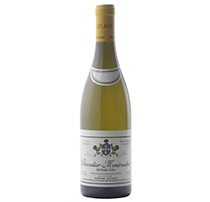
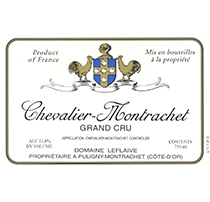
Burgundy | 2009 | Domaine Leflaive, Chevalier Montrachet Grand Cru | BT | - | - | - | HK$6,800 | 96 | AM | |
| All wines are subject to remaining unsold. We offer free delivery for purchase exceeding a certain amount. Please check Delivery Rates for details. | |||||||||||
This is also quite cool and restrained with a notably more complex nose of earth-infused and ripe but ultra refined red berry and black raspberry fruit aromas that are also classy while introducing balanced, refined and mouth coating flavors that possess superb verve and tremendous power and depth yet the transparency and harmony of expression is nothing short of remarkable. As with several of these wines, the amount of sap renders the big tannins almost invisible at present and I very much admire how the minerality remains the focal point of this wine from nose to finish. A wine that will age gracefully for decades.
Score: 96 Allen Meadow (AM), Bourghound (BH), June 2012
Bright yellow. Crystallized lemon peel, licorice and stony minerality on the nose. Dense but juicy on entry, then concentrated and brisk in the middle, with penetrating flavors of yellow fruits, minerals and crushed stone. Powerfully built but quite tight today; not as broad as the Batard but boasts terrific verve for the year. A distinctly vertical style of wine that gives an impression of strong sucrosite and firm acidity, almost in the style of a 2008. Wonderfully harmonious wine in the making, but lay it down.
Score: 95+ Stephen Tanzer (ST), Vinous Media (VM), September 2011
The 2009 Chevalier-Montrachet seems to combine elements of the Bienvenues and Batard. An open, floral bouquet melds into in sweet fruit, white flowers and the essence of crushed rocks. The Chevalier possesses striking inner perfume and fabulous balance as it wraps around the palate in stunning style. Leflaive´s parcels are located on the higher parts of the slope. 2019+. Domaine Leflaive is one of the pioneers in biodynamic viticulture in Burgundy. The first experiments began in 1990 and by 1997 all of the vineyards had been converted to biodynamic farming. Winemaker Eric Remy describes the 2009 growing season in considerable detail. The winter was long but mild. The last frost occurred on March 23. Temperatures were normal until the last week of the month, when the weather turned warmer. Flowering began on May 22. The rest of the spring and summer were warm, while a big storm in mid-July dropped 8cm of rain. The rest of the summer was quite warm. The harvest began on September 5, about ten days earlier than normal. Average yields were around 45 hectoliters per hectare. The wines were aged for 12 months in oak followed by 6-8 months in steel. New oak ranged from 10% for the Bourgogne, 15% for the villages, 20% for the premier crus and 25% for the grand crus. The 2009s were bottled between April and June 2011.
Score: 96 Antonio Galloni (AG), The Wine Advocate (WA), August 2011